
When my van’s engine gave out, my first instinct was to find the cheapest way out. I quickly found myself confused by the different terms sellers use. Through my research and conversations with mechanics, I learned that a used engine is essentially a second-hand unit pulled from a scrap vehicle. It’s a complete gamble with no guarantees about its internal condition or lifespan. A reconditioned Mercedes Sprinter engine typically means the seller has cleaned it up, maybe replaced some external seals and belts, but hasn’t necessarily addressed critical internal wear components. It’s a step up from purely used, but still a risk.
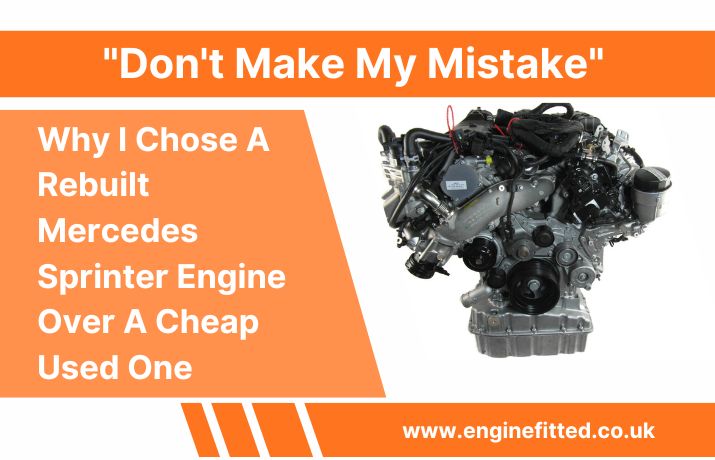
The option I ultimately chose was a rebuilt engine. This process is far more comprehensive. A reputable workshop will completely disassemble the engine, diagnose worn components, and replace critical parts like piston rings, bearings, and the timing chain. The goal is to restore its reliability, not just its appearance. While a remanufactured engine is rebuilt to factory-new specifications (often the best, but most expensive option), a properly rebuilt engine offers the best balance of cost and renewed reliability for a high-mileage vehicle like a Sprinter van.
Sprinter engines, while robust, are known for a few specific weaknesses. My original engine had a tell-tale timing chain rattle—a sign of a very expensive repair waiting to happen. If I had simply swapped it for another used engine, I could have been installing one with the exact same problem. A vague “reconditioned” unit might not have fixed it either.
A proper rebuild, however, directly addresses these known failure points. The timing chain and tensioners are replaced as a standard procedure. Common issues like leaking EGR coolers, worn injector seals, and carbon buildup are systematically resolved during the teardown and inspection process. You’re not just getting another engine; you’re getting an engine that has had its most common and costly flaws engineered out. This technical assurance was a key reason I felt confident in my decision to go with a rebuilt unit over a simple used replacement.
I was tempted by the low price of a used engine. It felt like a smart financial decision at the time. However, my mechanic gave me a harsh dose of reality. A used engine comes with an unknown history. It could be from a vehicle that was poorly maintained, leading to internal sludge, turbo wear, or other hidden issues that aren’t visible on the outside. You could be installing a time bomb that might fail in a few thousand miles.
When that used engine fails, you’re not just out the initial purchase price. You’ll have to pay for another replacement Mercedes Sprinter engine cost of labour to install it a second time. This double labour cost is what makes the “bargain” so costly. In contrast, the rebuilt engine I chose came with a solid two-year warranty that covered both parts and labour. The peace of mind alone was worth the higher initial investment, knowing that I was protected from a second massive financial hit.
This was a critical lesson for me. A warranty on Mercedes Sprinter engineis not just a marketing bullet point; it’s your primary protection. When comparing a used engine to a rebuilt one, the warranty terms tell you everything about the seller’s confidence in their product. A used engine might come with a 30-day warranty, if any, which is barely enough time to discover latent issues.
The warranty on my rebuilt engine was comprehensive. It was a 24-month, parts-and-labour warranty provided by the workshop that did the work. This meant that if any issue arose, they were responsible for fixing it completely. I made sure to get everything in writing, with clear terms on what was covered. A strong warranty transforms your replacement engine from a risky purchase into a reliable, long-term solution. It’s the foundation of trust between you and the mechanic.
My initial budget was just for the engine itself. I quickly learned that this was a mistake. Any engine swap, whether for a used or rebuilt engine, involves significant ancillary costs. You need to budget for new engine mounts, fluids, filters, and often a new clutch assembly if yours is high-mileage. These items are essential for a proper installation and to ensure the new engine isn’t compromised by old, worn-out components.
Furthermore, the quality of the installation is paramount. A cheap Mercedes Sprinter engine supply and fitting can doom even the best rebuilt engine. Factor in the labour cost for a reputable, Sprinter-experienced mechanic. While it’s tempting to cut corners here, skilled labour is an investment that ensures everything is installed correctly and the engine is properly broken in. When I added up all these “hidden” costs, the price gap between a risky used engine and a guaranteed rebuilt one narrowed significantly, making the rebuilt option the clear, sensible choice.
It’s been over 12 months and 20,000 miles since the installation, and the difference is night and day. The van starts instantly, runs smoothly, and has regained the power it had lost. There’s no more worrying about strange noises or warning lights. The initial investment has more than paid for itself in reliability and peace of mind. I use my van for work, and the confidence that it will start every morning is invaluable.
Looking back, choosing a rebuilt engine was one of the best decisions I’ve made for my vehicle. The process forced me to become an educated consumer, to understand what I was buying, and to value quality over a short-term saving. While the cheaper used engine was a siren call, I’m profoundly grateful I didn’t heed it. The rebuilt Mercedes Sprinter engine has given my van a genuine second life, and I’m confident it will be reliable for many years and miles to come.
