
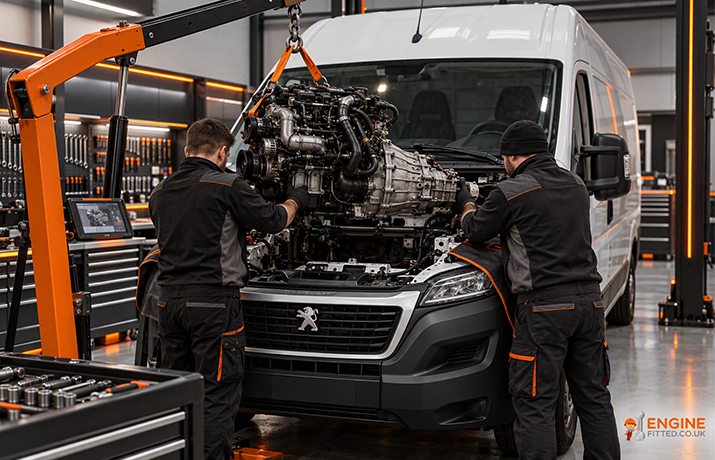
A supplied and fitted Peugeot Boxer engine typically costs £2,400–£3,800 in the UK. The important line on the invoice is not only the price — it is the replacement engine warranty, because panel vans work hard and the first 1,000 miles sorts the good installations from the rest.
| Route | Supplied and fitted | Cover | Lead time |
| Used Peugeot Boxer engine | £2,400–£3,200 | 30–90 days | 2–5 days |
| Reconditioned engine | £3,200–£3,800 | 12 months written | 1–3 weeks |
| Short engine | £2,700–£3,400 | Varies | 3–7 days |
| Rebuild your own | £2,800–£3,600 | Varies | 2–4 weeks |
| Vehicle | Years | Engine | Code family | Note |
| Peugeot Boxer | 2006–2014 | 2.2 HDi | DW12 | Injector and EGR faults |
| Peugeot Boxer | 2014–2018 | 2.0 BlueHDi | DW10 | DPF and AdBlue faults |
| Peugeot Boxer | 2016 onward | 2.0 BlueHDi | DW10FUD | SCR system to check |
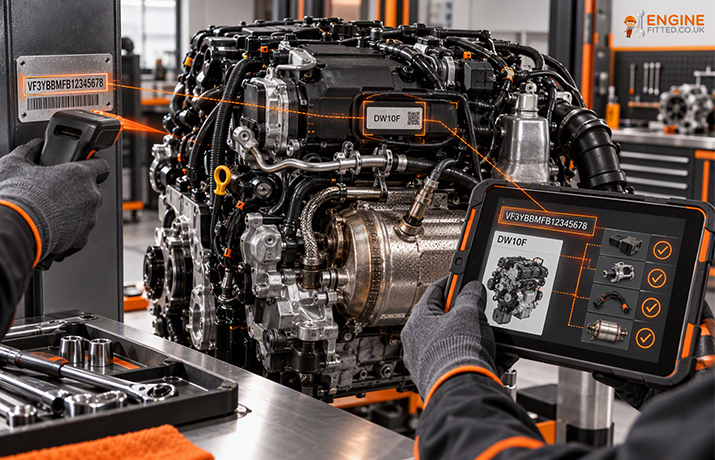
The Peugeot Boxer uses several engine variants across different model years, with differences in ancillaries, sensors, emissions systems and software. For a reliable Peugeot Boxer replacement engine, match the engine code and REG rather than relying only on engine size.
Ask the last question twice. Vans that sit waiting for parts cost the most.
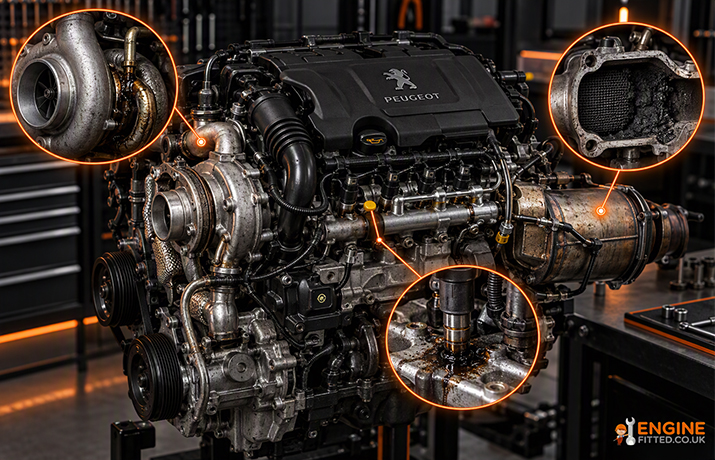
Most of these announce themselves. A rough idle, a whistle, or a DPF warning that keeps returning are all early warnings worth acting on.
A used Peugeot Boxer engine supplied and fitted usually costs £2,400–£3,200, while a reconditioned Peugeot engine typically costs £3,200–£3,800.
Match the replacement unit to the Peugeot Boxer’s REG, engine code, model year, emissions system and ancillaries before committing.
Almost always. Injector and seal repair costs £450–£1,000 against thousands for a replacement engine.
30–90 days for used, 12 months written for reconditioned, covering the engine and the fitting.
Two to five days for a used engine in stock, one to three weeks for a reconditioned unit.
Decode the REG, then confirm the Peugeot Boxer engine code and SCR system against the parts catalogue. Engine variants can use different ancillaries and software, so accurate REG engine matching is essential before purchase.
Front-end strip, engine out from above with the gearbox attached on most 2.0 and 2.2 HDi vans. Expect two days of labour with the replacement ready to go.
Light loads only for 500 miles, daily fluid checks, and an early oil change. Delivery vans get loaded immediately, which is the fastest way to shorten a new engine’s life.
Rarely. Replacement engines for the Peugeot Boxer are readily available and relatively inexpensive, so a rebuild usually makes sense only if your original unit is unusually low mileage or the van is otherwise immaculate.
Old parts returned, codes printed before and after, a documented road test, and the warranty certificate handed over. If a workshop avoids those questions, keep your money.
| Item | Typical cost |
| Used engine, supplied and fitted | £2,400–£3,200 |
| Reconditioned unit, supplied and fitted | £3,200–£3,800 |
| Turbo, if required | £700–£1,200 |
| Injectors, if required | £600–£1,100 |
| Hire van per week | £300–£600 |
| Post-fit oil change | £90–£140 |
If the van is used daily and the shell is sound, yes. Replacing the engine is usually cheaper than replacing the van, and the van you know is often safer than the one you do not.
Ignoring a DPF warning for months. On short-run delivery work that blockage cooks the turbo and contaminates the oil, turning a cleaning job into an engine replacement.
Engine number, code, mileage, parts fitted, warranty terms and disposal. Vans change hands quickly, and paperwork is what protects the resale value of a working vehicle.
A tested used engine held locally, fitted within a few days, with the injectors checked as a set. Boxer engines are common, so a good used unit rarely means a long wait.
| Work pattern | Best route | Why |
| Local deliveries, low mileage | Used engine | Cost-effective, quick |
| Long-distance, high mileage | Reconditioned engine | Warranty exercised hard |
| Mixed work, older van | Short engine | Cheaper if ancillaries are sound |
| Van with SCR system to keep | Reconditioned with coding | Software must match |
| Van being replaced soon | Used engine only | Do not over-invest |
Buy the engine and the fitting from one company, insist the timing belt is in the price, and keep the van earning.
On a manual van, absolutely. Loaded vans wear clutches quickly, and the labour is already paid for when the engine is out.
Check the boost pipes and the EGR first, then the DPF differential pressure. Loose intercooler pipework and a partially blocked DPF are the two most common causes of post-fit power loss on these vans, and both are cheap to sort when identified early rather than assumed to be a failing engine.
It can be, particularly when the head and ancillaries are healthy. You avoid paying for parts you already own, and the workshop can confirm the head condition with a pressure test. Ask for the bore measurements in writing before the engine goes back together.
