
When you start looking for a replacement BMW 118d, you’ll quickly realise that not all engines are created equal. The terminology used by suppliers can be confusing, and the price tag often reflects the amount of work—and peace of mind—you’re paying for. Understanding these distinctions is the first critical step in budgeting realistically. A used BMW 118d engine, often pulled from a donor vehicle, is the automotive equivalent of an organ transplant. It’s a complete, unopened unit with an unknown service history. Its price is low, but it’s a gamble, as its internal condition is largely a mystery until it’s installed in your car.
On the other hand, a reconditioned BMW 118d engine has been stripped down and rebuilt to a standard where its performance and reliability are restored. This process typically involves replacing worn items like bearings, piston rings, and oil seals. A step above this is a rebuilt BMW 118d engine, which implies a more comprehensive restoration. This might include cylinder head resurfacing, crankshaft grinding, and the installation of oversized pistons & rings to bring the engine back to its original factory specifications, or even beyond. Finally, a remanufactured BMW 118d engine represents the gold standard. This is a process where the engine is completely disassembled, every component is inspected against original blueprint specifications, and any component that is worn or out-of-tolerance is replaced with new OEM (Original Equipment Manufacturer) parts. The result is an engine that is, for all intents and purposes, brand new.
So, how much should you actually expect to pay? Let’s move from the theoretical to the tangible. For a BMW 118d, which typically houses a 2.0-litre diesel engine (codenamed N47 or B47 in later models), the costs can vary significantly based on your choice of unit. The most budget-friendly route is sourcing a used engine for sale near me from a vehicle dismantler. These can start from as little as £800 to £1,500, but this price is a baseline. You’re buying an unknown quantity, and you should factor in the potential need for immediate maintenance, like a new timing chain—a known weak point on earlier N47 engines. A 2nd hand engine is very much a ‘buyer beware’ proposition.
Moving up the scale, a professionally reconditioned engine from a reputable replacement engine supplier near me will command a higher price. For a reconditioned BMW 118d engine, you’re typically looking at a price range of £1,800 to £3,000. This increased cost covers the labour and parts involved in the rebuild. A supplier will often provide a fixed-price quote that includes the cost of reconditioned BMW engine and the initial swap. It’s crucial to ask what this price includes. Does it cover the reconditioned engine price only, or are ancillary parts like the water pump, timing belt, and thermostat included? These ‘while-you’re-in-there’ items are far cheaper to replace when the engine is on a stand, and replacing them can save you a fortune in labour later.
Knowing where to buy an engine is just as important as knowing which engine to buy. The UK market is flooded with options, from local scrapyards to national specialists, and your choice of supplier can make or break your experience. A simple search for engine sales near me might yield dozens of results, but how do you separate the wheat from the chaff? The best place to start is by looking for the best place to buy engines—and that usually means a specialist with a verifiable track record. You want a supplier that deals specifically with the engines they sell, not just a generalist breaking cars for parts. Look for a company that provides a comprehensive buyer protection guarantee and is transparent about their sourcing. They should be able to tell you about the donor vehicle condition and provide service history records or verified mileage documentation for the engine they are selling. A reputable supplier will also facilitate a secure checkout / Escrow services for peace of mind, especially for higher-value transactions.
When you’re searching online for a used engine for sale near me, it’s easy to be drawn to the cheapest option. However, this is where due diligence is critical. A legitimate business will have a physical address and a phone number that works. They will be happy to discuss the engine’s history and should have a collection of customer testimonials and Trustpilot ratings you can read. Be wary of sellers who only communicate via email or text and offer deals that seem too good to be true. They often are. For instance, an unusually cheap engine for sale might be a 2nd hand engine with no warranty, or it could be from a vehicle with a questionable past. Asking for an HPI clearance check on the donor vehicle can verify that the engine isn’t linked to any outstanding finance or insurance claims, which could theoretically cause issues down the line. A trustworthy specialist dealing in reconditioned engines UK will have a process for vetting their stock.
The cost of the engine itself is only one part of the financial story. The other, often equally substantial, half is the labour involved in the swap. This is where the phrase engine supplied and fitted becomes your best friend. Opting for a service that offers reconditioned BMW 118d supplied and fitted means you get a single, all-inclusive price, which simplifies budgeting and protects you from unexpected hourly rate shocks. The complexity of removing one engine and installing another means you’re paying for skilled labour, specialised knowledge, and the use of an engine hoist and specialized tools.
Labour rates in the UK can vary dramatically. As one guide notes, a mobile mechanic might charge £35-£50 per hour, while a specialist garage with fully certified technicians could command £75-£100 per hour or more. In a major city like London or Manchester, these rates tend to be at the higher end of the scale. For a job as involved as an engine swap, a garage will typically quote a set number of hours—often between 10 and 15 for a straightforward replacement. At £75 per hour, that’s £750 to £1,125 in labour alone. This is why a package deal for engine supply and fit near me is so attractive; it bundles the engine supply and fitting into one manageable figure.
The day your BMW 118d goes in for its engine transplant can be nerve-wracking, but knowing what to expect can ease the anxiety. If you’ve arranged for reconditioned engines fitted near me, the process should be smooth and professional. The garage will begin by confirming the details of the job, performing a final health check on your vehicle, and ensuring the new—or new-to-you—engine is ready for installation. This is a major procedure, so expect the car to be with the garage for several days. While the actual mechanical work might take 8-12 hours, the garage will need time for diagnostics, test drives, and to address any unforeseen issues that arise during the swap, such as corroded bolts or hidden damage.
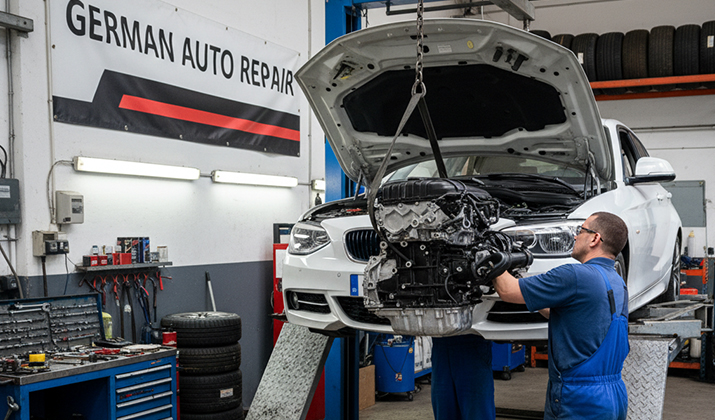
A professional team will approach the job methodically. They’ll disconnect the battery, drain all fluids, and then begin the careful process of removing components to access the engine bay. The old engine is then unbolted and lifted out using an engine hoist. Before the replacement unit goes in, it’s best practice to inspect the engine bay, clean it, and replace any worn engine mounts. The replacement engine is then carefully lowered into place. Once bolted in, the technicians will reconnect everything—from the wiring loom to the exhaust and cooling systems. The job isn’t finished with the physical installation. The next critical step is to fill the engine with fresh oil and coolant, prime the fuel system, and then attempt the first start-up. This is a tense moment even for experienced mechanics.
After all is said and done, and you’re back behind the wheel of your BMW 118d with its new heart purring away, the final question is always about value. Was it worth it? This isn’t just a financial calculation; it’s about the car’s place in your life. On one hand, you have to consider market value depreciation. A 10-year-old 118d with a new engine isn’t necessarily worth double a similar car with high miles. The book value might only increase marginally. So, from a purely resale standpoint, you may never recoup the full cost of the replacement. However, the equation changes when you consider the alternative. You know your car.
You know its history, its quirks, and its bodywork. Replacing the engine eliminates the single biggest unknown variable in an older car’s life. For the cost of a few thousand pounds, you effectively reset the clock on the most expensive component to fail. Compare that to scrapping your car and spending £10,000 or more on a replacement vehicle with an unknown history and its own set of potential problems. That new-to-your car could also be hiding a future engine failure. The investment in a replacement engine is an investment in a known entity. Furthermore, if you have chosen a premium remanufactured engine, the reliability and performance can exceed that of a standard used car, offering years of trouble-free motoring.
