Looking back, the signs were there from at least twelve months before I accepted the engine was in serious trouble. The first was a faint ticking sound on cold starts that I assumed was simply the engine warming up. In reality, this is a classic symptom of low oil pressure or worn hydraulic tappets, and in many Corsa 1.2 and 1.4 petrol units, it’s a precursor to more significant internal wear. Then came the occasional puff of bluish-grey smoke from the exhaust — nothing dramatic, nothing that alarmed other road users — but enough that a competent technician would have immediately suspected valve stem seals or piston rings beginning to fail. I dismissed it. I told myself it was condensation. I was wrong. The diagnostic trouble codes (DTCs) that later appeared on the dashboard — including the dreaded engine management light — were the engine’s final, unambiguous plea for attention. By that point, the internal combustion assembly had suffered damage that no oil top-up or quick service was going to resolve.
The reason most drivers, myself included, ignore early warning signs comes down to a mixture of optimism, inconvenience, and — let’s be honest — cost avoidance. A garage visit feels disruptive. We assume the car will ‘sort itself out.’ But what a compression testing appointment might have revealed early on would have cost me perhaps £60 to £80 in diagnostic time. The eventual bill for a full replacement Vauxhall Corsa engine was several times that figure. Experienced mechanics will tell you that the most expensive repairs are always the ones that started as small problems and grew unchecked. The Corsa’s 1.2-litre and 1.4-litre engines are generally robust units, but they are not indestructible, and they do not take kindly to being neglected. If your engine is sending you signals — unusual sounds, unexpected fuel consumption, rough idling, or warning lights — the most financially sensible thing you can do is investigate immediately rather than wait for a breakdown.
Once I accepted that the engine was beyond economical repair through individual component replacement, I began researching my options seriously for the first time. The terminology alone was initially confusing. A reconditioned Vauxhall Corsa engine refers to a unit that has been stripped, cleaned, measured, and rebuilt to OEM (Original Equipment Manufacturer) specifications using a combination of new and reusable parts. A rebuilt Vauxhall Corsa engine, in everyday usage, means much the same thing, though the depth of reconditioning can vary between suppliers. A remanufactured Vauxhall engine, on the other hand, implies a more thorough, factory-standard process — often involving crankshaft grinding, cylinder head resurfacing, engine block honing, fitting of oversized pistons and rings, and strict adherence to tolerances and clearances that match British Engineering Standards (BS EN). The distinction matters because not every supplier holds themselves to the same quality benchmark, and a cheap unit can be a very expensive mistake if it fails within months of fitting.
By contrast, a used Vauxhall Corsa engine — also referred to as a second-hand Vauxhall Corsa engine or a 2nd hand engine — is one removed from a donor vehicle and sold without significant mechanical attention. These units can represent good value, particularly low-mileage petrol or diesel units sourced from vehicles written off due to bodywork damage rather than mechanical failure. However, the risk is considerably higher unless you have access to verified mileage documentation, service history records, and confirmation of the donor vehicle condition. Some reputable suppliers also provide HPI clearance checks and buyer protection guarantees. If you’re searching for a used engine for sale near me, always prioritise sellers who provide written documentation on the unit’s origins and at least a short-term warranty. Recycled vehicle components, when properly vetted, can offer excellent value — but ‘properly vetted’ is doing a lot of work in that sentence.
This is the question most people ask first and most honestly need answered. The reconditioned engine price for a Vauxhall Corsa will vary depending on the specific engine code, the supplier’s reconditioning standards, and whether the quote includes VAT inclusive pricing or presents costs excluding tax. Broadly speaking, in the current UK market, a quality reconditioned Corsa engine unit — covering popular variants such as the Z10XE, Z12XE, Z14XEP, and the 1.3 CDTi diesel — might range anywhere from £500 to £1,200 for the unit alone, with some premium remanufactured units sitting at the higher end of that scale. The reconditioned engines price list UK varies significantly between suppliers, so it’s well worth requesting fixed-price quotes from at least three sources and carrying out a direct comparison of reconditioned vs new prices before committing.
What catches many drivers off guard is that the engine unit cost is only part of the total expenditure. When budgeting for a full engine supply and fitting job, you need to factor in labour rates per hour (which can range from £50 to £120 depending on whether you’re using an independent garage or a main dealer), ancillary parts such as a new water pump and timing belt — which should always be replaced during a major engine job — fluid flush and refill for coolant and oil, and in some cases ECU re-programming if the replacement unit requires adaptation to the vehicle’s electronics. Some suppliers also operate a surcharge exchange policy, whereby you receive a discount on the new unit in exchange for returning your old engine core — the surcharge is refunded once the core unit has been assessed. Understanding the complete breakdown of machining costs and ancillary expenditures before signing anything is essential. Always ask for an itemised written quote, not just a verbal estimate.
When I first began searching for a replacement engine supplier near me, I quickly discovered that the UK market for reconditioned and remanufactured engines is large, varied in quality, and not always easy to navigate. The safest approach is to search for a supplier who can demonstrate a genuine track record — not just a polished website. Customer testimonials and Trustpilot ratings are a useful starting point, but look beyond the headline score and read the detail of negative reviews to understand how complaints were handled. A reputable supplier offering reconditioned engines UK-wide should be able to provide a written warranty, clarity on what the reconditioning process involved, and straightforward answers to questions about the specific engine code you need. National suppliers with an established network are often preferable to smaller local traders when it comes to warranty claim procedures, because the infrastructure to honour those claims is firmly in place.
Alternatively, if you’d prefer to keep things local, searching for engine sales near me or refurbished engines near me will surface independent specialists in your region who may offer more personalised service. VOSA approved garages with experienced technicians, proper engine hoist equipment, and specialised tools are your safest bet for fitting work. The most seamless solution, particularly if you don’t have a preferred mechanic, is to source your engine from a supplier who also provides engine supply and fit near me as a combined package — meaning they both supply the unit and handle the installation. This is often available as a reconditioned Vauxhall Corsa engine supplied and fitted service through certain national networks, and it removes the complication of coordinating two separate parties. Secure checkout and escrow services offered by some online platforms can also provide additional financial protection if you’re purchasing remotely.
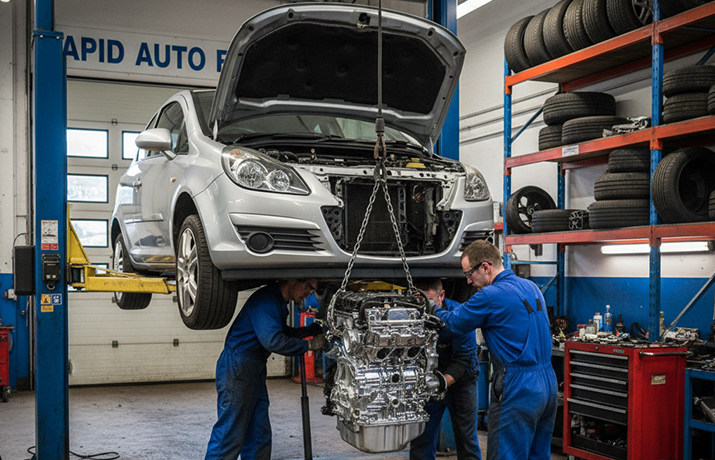
Having the engine replacement UK carried out professionally is not simply a matter of unbolting the old unit and bolting in the new one — though that description sometimes gives that impression. A properly conducted engine swap on a Vauxhall Corsa involves a systematic approach that begins with a full diagnostic scan to record any existing diagnostic trouble codes, draining all fluids, disconnecting ancillary components (including the alternator, power steering pump, air conditioning compressor, and exhaust manifold), and removing the engine using a professional engine hoist.
Fully certified technicians will inspect the engine bay whilst it’s exposed, checking for any collateral damage — corroded mounts, cracked brackets, perished hoses — that should be addressed before the new unit goes in. This is also the stage at which the timing belt, water pump, and other service items should be replaced, because the labour cost of accessing them later would far exceed the cost of the parts themselves at this juncture.
